
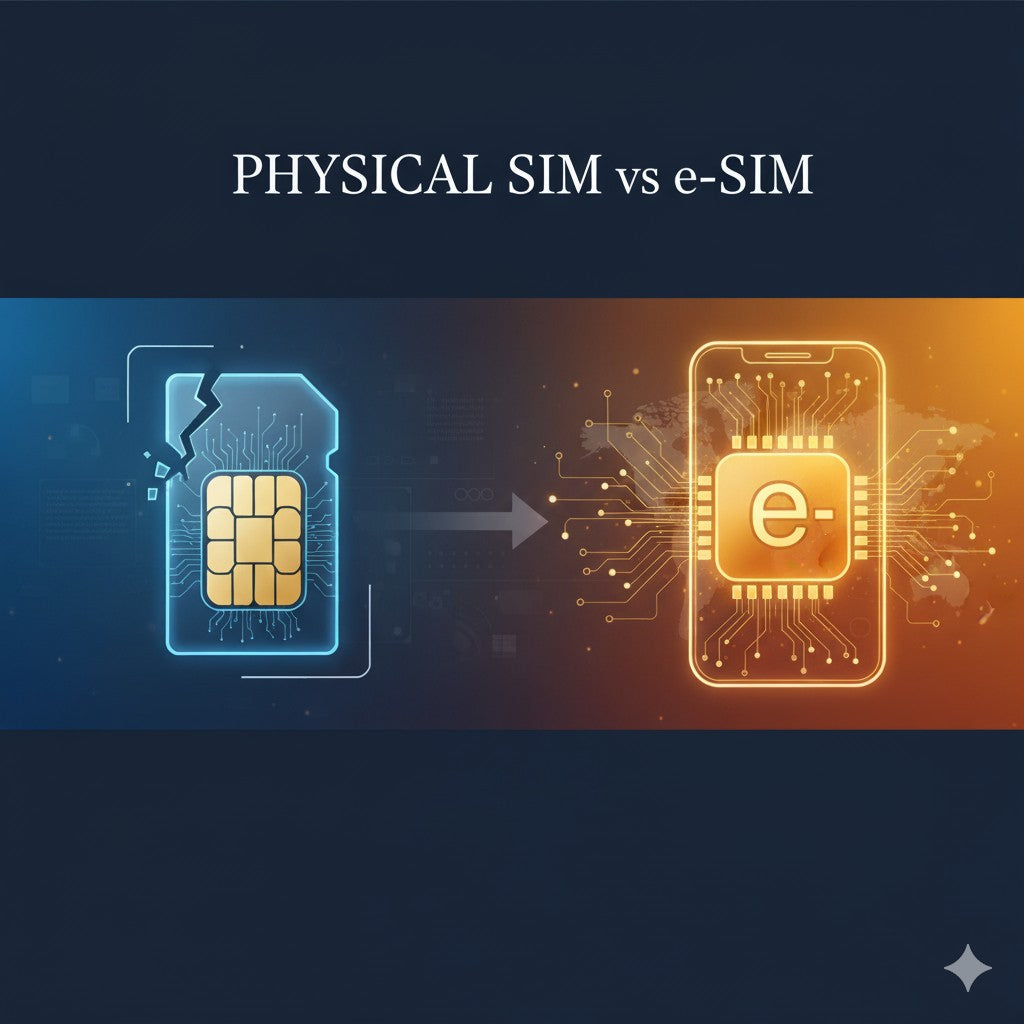
Physical SIM vs e-SIM: Why Buying an e-SIM is Smarter in 2025
Share
Travel should be a pleasure, not a pain. Yet many of us have felt the frustration of landing in a new country only to face exorbitant roaming charges, endless queues at SIM kiosks, or awkward language barriers. For frequent travelers, swapping SIM cards or hunting down the perfect plan can quickly become a tedious chore.
For years, the debate between physical SIM and eSIM has lingered. But in 2025, digital solutions are taking center stage. The most convenient and budget-friendly way to travel today is to buy an e-SIM. It’s compatible with multiple devices, activates in seconds, and offers unmatched flexibility.
A Quick Look Back: The Era of the Physical SIM
For decades, physical SIM cards have been the go-to for connecting to mobile networks worldwide. These small chips safeguard your phone number and enable you to tap into local networks wherever you are. They’re user-friendly—pop in the SIM, and you’re ready to go. No internet connection is needed to buy them at a store or kiosk.
However, physical SIMs come with significant drawbacks. They’re fragile, easy to misplace, and often limited to a single device or country. For those who travel frequently, swapping SIMs can be a time-consuming hassle. Losing your SIM on the road could mean losing your number, contacts, or connectivity altogether. While physical SIMs served travelers well for years, their lack of convenience and flexibility is becoming increasingly apparent.
What exactly is an e-SIM?
An e-SIM (embedded SIM) is the digital counterpart of a traditional SIM card. Instead of inserting a physical chip, your device comes with a built-in SIM that you can activate digitally. Setup is a breeze: just scan a QR code or use your provider’s mobile app, and your device connects to the network instantly.
By 2025, most smartphones, tablets, and wearables support e-SIMs, making them ideal for travelers juggling multiple devices. An eSIM is particularly valuable for frequent globetrotters, as it allows you to switch carriers in different countries without visiting a kiosk. With just a few clicks, you can change networks, manage your data usage, and stay connected effortlessly. The ease and adaptability of e-SIMs are truly transforming the travel experience.
Head-to-Head Comparison: Physical SIM vs e-SIM
When comparing physical SIMs and e-SIMs, several key differences stand out:
Convenience & Setup:
Physical SIMs require manual swapping, while e-SIMs activate instantly via a QR code or app.
Cost:
Traditional SIMs often mean purchasing multiple local cards. With e-SIM, you can pick the cheapest e-SIM plan online, customized to your travel needs.
Coverage:
Physical SIMs are tied to a single local network, whereas e-SIMs offer flexible multi-country use without changing cards.
Security:
A lost SIM means a lost number, but e-SIMs are embedded in your device, making them harder to misplace or steal.
Flexibility:
Physical SIMs typically work in one country. e-SIMs handle multi-country trips seamlessly, making them perfect for international travelers.
Overall, for most travelers, e-SIMs beat physical SIMs in convenience, flexibility, and cost-effectiveness.
5. Why Buying an e-SIM is Smarter in 2025
Here’s why investing in an e-SIM makes sense in 2025:
Instant connectivity:
No more searching for SIM kiosks after a long flight. Activate your e-SIM with a simple QR scan and get online right away.
Budget-friendly:
Access the cheapest e-SIM plan for your destination and skip pricey roaming fees.
Eco-friendly:
Digital SIMs cut down on plastic waste from traditional SIM packaging.
Dual SIM capability:
Keep your home number active while using travel data.
Future-proof:
As e-SIM adoption grows, physical SIMs are gradually fading out.
For anyone who values hassle-free connectivity, speed, and savings, an e-SIM for frequent travelers is the clear winner.
When a Physical SIM Still Makes Sense
While e-SIMs are the future, physical SIMs still have their place:
-
Older or budget devices that don’t support e-SIM technology.
-
Countries with limited e-SIM adoption.
-
As a backup for emergencies or device issues.
Physical SIMs are useful in specific situations, but for most travelers, e-SIMs provide a smoother, more seamless experience.
From Frustration to Freedom: How to Buy and Use an e-SIM in 2025
Picture landing in a new country and bypassing the chaos of SIM kiosks—that’s the freedom e-SIMs offer. Here’s how it works in 2025:
- Check if your phone supports e-SIM.
-
Buy an e-SIM for International Travel from a trusted provider like simswift.com before your trip.
-
Select the cheapest e-SIM plan for your itinerary.
-
Scan the QR code and enjoy instant connectivity.
In just minutes, you’re online—whether in Europe, Asia, or the Americas. No queues, no SIM swapping, just immediate access. That simplicity is why e-SIMs are the smarter choice for modern travelers.
Pro Tips for Travelers Using e-SIMs
Make the most of your e-SIM with these tips:
-
Activate your e-SIM before you leave.
-
Keep a physical SIM as a backup for countries with limited support.
-
Opt for regional or global e-SIMs on multi-country trips.
-
Monitor your data usage to avoid overspending.
These straightforward strategies ensure you stay connected smoothly and affordably throughout your travels.
The Future of Travel Connectivity
e-SIM adoption is expanding rapidly among carriers and device makers, while physical SIMs are being phased out. In the near future, travelers can look forward to even more affordable, flexible, and easy-to-manage e-SIM plans. Buy an e-SIM today to stay ahead of this shift and enjoy the convenience of digital connectivity wherever you go.
Conclusion
For years, physical SIMs served travelers well, but in 2025, e-SIMs are the smarter, faster, and more eco-friendly option. With instant activation, multi-country plans, and cost savings, buying an e-SIM makes staying connected effortless.
Don’t wait—get your e-SIM from simswift.com today and discover the best e-SIM deals for your next trip. Travel smarter, stay connected, and enjoy limitless freedom.